


How to Overseed or Reseed Your Lawn: Lawn Repair Guide
Overseeding, also called reseeding or oversowing, means sowing new lawn seed into your existing lawn. It’s one of the easiest ways to repair a tired lawn. It thickens thin grass, fills bare patches, improves colour and rejuvenates an old lawn without starting from scratch. It’s a great way to renew your lawn when kids, pets and seasonal conditions give it a hard time.
When is the best time to overseed a lawn?
Spring and Autumn are the best times to overseed, when temperatures are moderate and new seed establishes well. You can overseed at other times of the year, but in summer you’ll need to water more often, and in winter germination is slower.
Warm-season lawns in cooler areas: Buffalo, Kikuyu and Couch go dormant and lose colour over winter in cooler locations. Oversowing with a cool-season grass, such as Ryegrass or a Ryegrass blend, in autumn before the change of season keeps your lawn green through winter. As the weather warms up in spring, your warm-season grass takes over again.
How to overseed your lawn: step by step
Step 1: Mow the lawn short
Mow your lawn more closely than usual, so the new seed can reach the soil.
Step 2: Rake out thatch and dead grass
Rake the lawn firmly to remove and break up layers of dead, matted grass and thatch. This exposes the soil so the seed can make good contact with it.
Step 3: Loosen compacted soil
If the ground is compacted, loosen it by spiking with a garden fork to a depth of at least 15cm. This improves root growth and drainage.
Step 4: Choose your lawn seed
Ideally, choose the same type of seed as your existing lawn so the new grass blends in. See our suggested seed blends by state and season.
Step 5: Apply a starter fertiliser
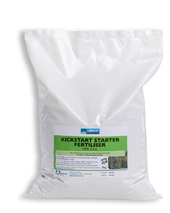
Apply Landscape Range KickStart Starter Fertiliser at 3kg per 100m², up to two days before sowing or on the same day, and water it in. KickStart is balanced to help new seed germinate and grow strong roots.
Step 6: Sow the seed
Use the oversowing rate on the seed pack. For an even spread, sow half the seed walking up and down the lawn and the other half walking across it, concentrating on thin or bare areas. You can sow by hand or with a spreader. For small areas, use a handheld spreader. For larger areas, use a push broadcast spreader. Rake lightly afterwards so the seed settles into the soil.
Step 7: Keep the seed moist
Water regularly with a fine spray, keeping the seedbed constantly moist until the new grass is established. Germination usually takes 7 to 21 days and is slower in cooler weather. Once the grass is established, water less often but more deeply to encourage a deeper root system.
Step 8: Mow on a high cut
Mow for the first time when the new grass is 40 to 50mm high. Trim lightly, then gradually lower the blades to an ideal cutting height of 25 to 30mm. Mow regularly, and try not to remove more than a third of the growth at any time.
Step 9: Fertilise again at 6 to 8 weeks
After 6 to 8 weeks, feed your lawn with Landscape Range All Seasons Fertiliser, then follow a regular feeding program. See How to Fertilise.
SHOP: FIND PRODUCTS FOR OVERSEEDING




Frequently Asked Questions
What’s the difference between overseeding, reseeding and oversowing?
They all mean the same thing: sowing new seed into an existing lawn to thicken it up and repair thin or bare areas. Starting a completely new lawn from bare soil is different; see our guide on how to sow lawn seed.
Can I reseed a dead lawn?
If your lawn is mostly dead, follow the steps above but rake more thoroughly to clear the dead grass, and loosen the soil well so the new seed can take root. If there’s very little living grass left, it may be better to start fresh by sowing a new lawn.
How do I rejuvenate an old lawn?
Overseeding is one of the best ways. Clearing out thatch, loosening compacted soil and sowing fresh seed brings new, healthy grass into a tired lawn. Follow up with regular feeding to keep it thick and green.
Can I just throw grass seed on my existing lawn?
Seed scattered onto an unprepared lawn rarely does well, because it can’t reach the soil through the grass and thatch. Mowing short, raking and loosening the soil first makes a big difference.
When can I walk on my lawn after overseeding?
Keep foot traffic to a minimum for the first four to six weeks while the new grass establishes.