

How to Get the Right Sowing Rate
How to Get the Right Sowing Rate (And Why It Matters for Your Job)
Getting the sowing rate right is one of the simplest ways to keep a job on budget and on time. Order too little seed and you're stuck waiting on a second delivery mid-job. Order too much and you're carrying cost you didn't need to.
Here's how to work it out properly, before you order.
What Is a Sowing Rate?
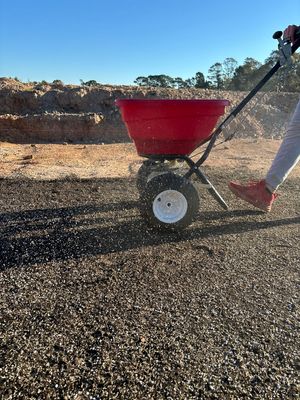
Sowing rate is the amount of seed recommended per square metre to get even, reliable germination. Every seed blend has its own rate — it depends on seed size, germination rate, and what the blend is designed for (new lawns, overseeding, high-traffic areas, and so on).
You'll find the sowing rate listed on each product page, along with fertiliser application rates for the matching starter or seasonal fertiliser.
Step 1: Measure the Area Properly
Measure the actual area you're sowing in metres. If you're only overseeding worn or bare patches rather than the full area, measure just those sections.
For irregular areas, break the site into simple shapes (rectangles, triangles) and add the totals together.
Step 2: Choose New Lawn vs Overseeding Rate
Most products list two rates:
- New lawn / renovation rate — a higher rate, used when sowing bare soil from scratch
- Overseeding rate — typically half the new lawn rate, used when thickening up existing turf
Using the new lawn rate when you're only overseeding will waste product. Using the overseeding rate on bare soil will leave you under-covered.
Step 3: Calculate Your Total
Once you have your area (m²) and the correct rate (kg per 100m² or per m², depending on the product), the calculation is straightforward:
Area (m²) ÷ 100 × sowing rate (kg per 100m²) = total kg required
Round up rather than down — a small buffer is cheaper than a second order.
Step 4: Match Your Fertiliser Quantity
Starter fertiliser and seasonal fertiliser have their own application rates, usually also listed per 100m². Calculate this the same way as your seed, using the same measured area.
KickStart Starter Fertiliser is 3kgs per 100sqm
Step 5: Check Stock Before You Order
Once you know your quantities, check current stock availability on the product page. For larger jobs, ordering slightly ahead of when you need it avoids any last-minute scramble if a product is running low.
A Quick Example
Say you're overseeding 250m² of worn turf on a school oval, using a blend with an overseeding rate of 2kg per 100m²:
250 ÷ 100 × 2kg = 5kg of seed required
Match this with the starter fertiliser's listed rate for the same 250m², and you've got an accurate order — no guesswork, no excess.
Need a Hand?
If you're working on a larger or more complex job and want help getting your quantities right, get in touch — we're happy to help you work it out before you order.
Great Aussie Lawns Trade — quality seed, on time, on budget.